
Academic honors, research and career preparation
How to Write a Research Abstract as an Undergraduate
A research abstract briefly explains the question, approach, main result and significance of a project while staying within the submission’s exact requirements.
An abstract may be the only part of your project a reader sees before deciding whether to attend the presentation or open the paper. It needs to be concise, but it also needs to say something. “This project explores an important topic” is not enough.
Honor Society® supports the connection between achievement and career preparation. Learning to summarize research accurately helps you explain complex work in applications and professional conversations.
Quick answers
When should I write the abstract?
For completed research, draft it after the argument and findings are stable. For a proposal or work-in-progress submission, follow the required format and label the project’s status.
Should an abstract include results?
A completed-research abstract generally needs the main result or contribution. Do not replace it with a promise that results will be discussed unless the submission specifically calls for that format.
Can I include citations?
Follow the submission instructions and disciplinary expectations. Avoid adding references merely to make the abstract appear authoritative.
What if my result is inconclusive?
State what the evidence supports and what remains unresolved. An honest account of a limited or inconclusive result is stronger than an invented definitive conclusion.
Read the submission instructions first
Check the word limit, required headings, audience, project stage and any restrictions on references or identifying details. An abstract for a conference, thesis repository and course assignment may serve different purposes.
UNC’s abstract-writing handout provides a university writing reference. Use the specific event or department instructions to decide the final structure.
Draft the core information in plain language
Write a sentence for each function, then combine or revise as the limit requires.
| Function | Drafting prompt |
|---|---|
| Context | What problem or conversation makes the question meaningful? |
| Question | What exactly did you investigate? |
| Method | What evidence and approach did you use? |
| Result | What did you find or produce? |
| Significance | What does the result help explain, within its limits? |
For humanities and creative work, the result may be an interpretation or contribution rather than a numerical finding. The abstract still needs to explain what the project accomplishes.
Study a fictional example
The following is an invented example, not a report of a real study:
“Campus wayfinding maps can communicate different assumptions about how students move. This project compared accessibility information in four publicly available campus maps using a predefined coding scheme. The analysis found that all four marked major buildings, while only two consistently identified step-free routes. Because the sample was small and selected for illustration, the findings do not estimate the prevalence of these design choices across universities. The comparison suggests a focused checklist for evaluating whether a map makes route accessibility visible.”
Notice the bounded sample, stated method, actual finding and explicit limit. The final sentence offers an implication proportional to the evidence.
Remove sentences that do no work
Replace “The results were interesting” with the result. Replace “Many scholars have studied this issue” with the specific context needed to understand your question. Define or remove unfamiliar abbreviations, and avoid a dramatic opening that consumes space without clarifying the project.
Check the abstract against the full paper sentence by sentence. Every method and result must match. If the project changed, update the abstract rather than preserving an outdated summary.
Use feedback without losing accuracy
Ask a reader outside your project to identify the question and main finding. If they cannot, revise the structure before polishing individual words. If AI feedback is permitted, ask for clarity questions rather than new findings or citations; verify all suggestions with your actual research record.
Continue with the poster guide, literature-review guide and research portfolio guide. Your next step is to draft the five core functions, then cut only what the submission does not need. Concision should preserve the research, not erase it.
Related academic honors guides
- Academic Honors: A Practical Guide from College to Career
- What Is an Honors Thesis? From a Good Question to a Finished Project
- How to Choose an Honors Thesis Topic You Can Actually Finish
- How to Find an Honors Thesis Adviser and Start the Conversation
Reviewed by Mike Moradian
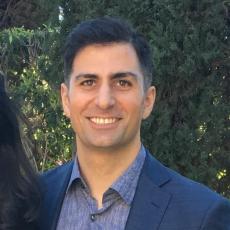
Reviewed by Mike Moradian, CEO of Honor Society. Mike is a UCLA alumnus and Entrepreneur contributor whose work focuses on education and student success.
Editorial note: School-policy examples and source links were checked October 16, 2026. Your institution or application provider determines the requirements that apply to you. Fictional examples are illustrations, not reports of actual student outcomes.


