
Academic honors, research and career preparation
How to Find an Honors Thesis Adviser and Start the Conversation
Find an honors thesis adviser by matching your question with faculty expertise, confirming eligibility and availability, and discussing how the working relationship would function.
The best-known professor in a department is not automatically the best adviser for your project. You need relevant expertise, availability and a workable way to communicate about drafts, decisions and uncertainty. Start by making the project understandable.
Honor Society® connects academic achievement with career guidance. Learning to seek informed feedback and maintain a professional working relationship is part of that preparation.
Quick answers
How do I identify potential thesis advisers?
Review faculty research descriptions, recent work and department guidance. Ask instructors or the honors office who is eligible to supervise your type of project.
Should I arrive with a complete proposal?
A focused concept note is often a useful starting point. Ask the program what is expected before contacting a prospective adviser.
Can a professor decline even if the topic fits?
Yes. Availability, leave, workload or program rules may limit supervision. A decline does not necessarily evaluate your potential or the value of the question.
What should I clarify before committing?
Discuss project scope, meeting expectations, draft feedback, milestones, required approvals and what happens if the project changes.
Look for a match in the actual work
Read enough of a faculty member’s work to explain why you are contacting them. You do not need to pretend expertise, but you should identify a real connection between their interests and your question.
Stanford’s guidance on developing a mentor relationship emphasizes the importance of faculty mentorship. Your program determines who may formally supervise the thesis. Confirm that eligibility before building a plan around a particular person.
Prepare a short, useful outreach message
Adapt this template to a real faculty member and your actual preparation.
“Dear Professor [Name], I am a [year/major] student preparing an honors thesis on [focused question]. Your work on [specific topic] helped me think about [connection]. I have completed [relevant preparation] and am developing a project using [evidence or method]. Would you be available for a brief conversation about whether the project fits your supervision and what preparation it would require? I have included a short concept note. Thank you, [Name].”
Follow any contact instructions on the faculty or department page. Avoid a generic mass message or a lengthy autobiography.
Ask how the relationship would work
Use the first conversation to explore fit in both directions.
| Topic | Question |
|---|---|
| Scope | Is this question feasible for an undergraduate thesis? |
| Expertise | Which parts fit your supervision, and where might I need another adviser? |
| Feedback | How should I share drafts, and what lead time is realistic? |
| Meetings | What meeting pattern would support the work? |
| Milestones | What should be completed before each major review? |
| Changes | How should we handle delays or a necessary scope adjustment? |
Take notes and send a concise recap after any substantive agreement. A shared understanding is easier to maintain when it is written down.
Respond constructively to a decline
Thank the professor and, if appropriate, ask whether they suggest another faculty member or a narrower direction. Do not interpret silence as approval. A brief follow-up after a reasonable interval is appropriate when consistent with the department’s instructions; repeated pressure is not useful.
Fictional example: A professor likes Ren’s question but is on leave during the planned project term. Ren asks for a referral and adjusts the thesis timeline, preserving the project without assuming supervision is available.
Begin with a concrete first milestone
Once supervision is confirmed through the required process, agree on the first deliverable. That might be an annotated source list, method sketch or revised topic concept note. Ask what a satisfactory version should demonstrate.
For an initial research role rather than an independent thesis, use the undergraduate research email guide. Your next step is to identify a small set of relevant faculty, read their work and write one genuinely tailored message.
Related academic honors guides
- Academic Honors: A Practical Guide from College to Career
- What Is an Honors Thesis? From a Good Question to a Finished Project
- How to Prepare for an Honors Thesis Defense with Confidence
- How to Make an Undergraduate Research Poster People Can Follow
Reviewed by Mike Moradian
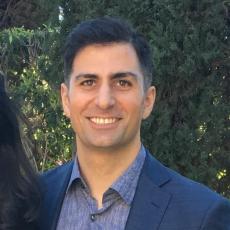
Reviewed by Mike Moradian, CEO of Honor Society. Mike is a UCLA alumnus and Entrepreneur contributor whose work focuses on education and student success.
Editorial note: School-policy examples and source links were checked October 16, 2026. Your institution or application provider determines the requirements that apply to you. Fictional examples are illustrations, not reports of actual student outcomes.


