
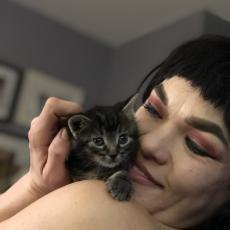
Honor Society® member
Hannah-Mae Brown
- developmental psychology
- Class of 2009
- Santa Barbara, California
Member since November 2021
About
My academic and personal journey over the past fifteen years has been unconventional and filled with multiple peaks and valleys. I always knew that I wanted to pursue a career I was genuinely passionate about. Although, until a couple of years ago, I had no concept of what I was passionate about. My transcript reflected the lack of direction that I was feeling. I navigated my classes in the same way that others navigate their young romantic lives. Trying out career paths like a serial first-dater, in hopes of finding “the One ''. Then, once the initial intrigue would wear off, I would soon realize there lacks any lasting interest. Now at thirty years old, I have finally found my match so-to-speak. Some may call me a late bloomer, but I would argue that my unusual path is exactly what laid down the groundwork for me to eventually come to find my passion with clarity.
After over a decade of committing all aspects of myself to my work and being financially independent, it was an unexpected turn in my health that brought me back to school. A little over 2 years ago, it was as if everything in my body went haywire. My legs couldn’t walk, my eyes couldn’t see without double-vision, the coordination of my hands and feet were off; and my doctors could not seem to figure out any reason as to why. It would take over a year of being bedridden for a doctor to take enough notice to run a few blood tests, finally leading to a diagnosis. What I had been experiencing was actually a fairly dangerous flare up of an extremely rare form of Myasthenia Gravis, called MUSK antibody positive MG.
But while my body was out of commission I focused my energy internally, and the progress I made in this time was monumental. As torturous as it may seem, there really is something to be said for having to be completely alone with one’s own thoughts. Although my body was essentially useless at the time, my brain activity certainly wasn’t hindered. Left with my busy thoughts I avoided boredom through introspection and self-reflection, and in effect began to visualize what it was that I valued the most and what I wanted out of life. Additionally I needed more mental stimulation, which motivated me to return to school virtually. It wasn't until this point that I truly came to value both my mental capabilities and potential, and felt full heartedly invested in nurturing its growth.
Since my return to school this year I have displayed my improved level of motivation, drive, passion and follow-through. I am proud to say I consistently received a 4.0 every semester upon my recent return, before finally making the Presidential Honor Roll. I cannot overstate the difference in motivation and therefore focus I have in the present. I have a plan (which includes continuing education to at least a Master’s degree level) and I am on a mission to do what I need to do to get it done.
Thank you for your time and consideration,
Hannah-Mae Brown
Education
-
Santa barbara city college
psychology
2007 – 2021
Honors and awards
-
presidential honors
Beginning Fall 2021
-
honor society
Beginning Fall 2021
Goals and interests
- Career goal
The foundational motivation for pursuing the field of psychology is the desire to help others, and I have especially been drawn to providing that to groups of people that are most in need or have been most severely ignored. For the application of clinical psychology, this has motivated me to pursue additional studies in American Sign Language with the goal of becoming fluent in order to provide a form of “talk therapy” for those that do not talk. I can imagine the options for Deaf patients are limited, and finding a signing therapist is a significant challenge. Of course, Deaf individuals experience the struggles of life’s trials and tribulations just as hearing individuals do, and I want to be able to make these services more accessible to the Deaf community. For the application of furthering psychological research, I believe that studying the Deaf brain could be a treasure trove of valuable new information which helps us better understand neuroplasticity that occurs in the Deaf brain, as well as providing us with a more evolved understanding of the human brain in general in the ways in which it functions. I was fascinated to learn in my Physiological Psychology course that much of what we know about how the brain processes information comes from studies of sensory deprivation, namely sight. This got me thinking about similarly understanding the processing that occurs with sound deprivation could also lead to vast insights. Lastly, a practical application of my blended interests is one which originated from learning about problems in development and even brain damage in Deaf children whose parents did not instill the use of ASL due to language deprivation. This inspired me to ponder other possible ways in which Deaf children are reared that may not provide them with the appropriate kinds of stimulation necessary during their sensitive period to create neural connections in which result in advantageous skill sets that allow them to reach their full potential as adults. Perhaps teaching and practicing ASL with children is simply just scratching the surface. A greater understanding of the ways in which the non-hearing brain processes and reroutes stimuli could potentially allow us to try to influence those pathways to redirect input in specific ways to establish and reinforce specific neural connections that play to the individual’s strengths. My hope is to effectively create an early developmental plan individualized for rearing Deaf children that utilizes their unique differences in brain wiring to develop valuable skills that will be advantageous later in life. I think of the amazing potential of Deaf individuals for contributing to fields that involve complex spatial and visual understanding, such as mathematics, engineering, architecture, urban planning, choreography, even fashion design. By looking at the physiological differences I hope to be able to propose effective strategies to not only avoid the problems stemming from those physiological differences, but to address them in such a way that they work to that individual's advantage and they can truly thrive.
- Graduate school interests
Starting Antioch University’s Bachelor Program in January 2022, I plan on continuing my education in the Graduate Program they also have available. My long-term plan is to additionally pursue a Phd thereafter, although I am not sure if I will decide to also do so at Antioch or a different accredited school. I plan to studies in Developmental Psychology, as well emphases in both Applied and Physiological Psychology. As I am doing now, I plan to pursue these fields in tandem with my continued studies of American Sign Language.
Languages
- English (US) Fluent


