

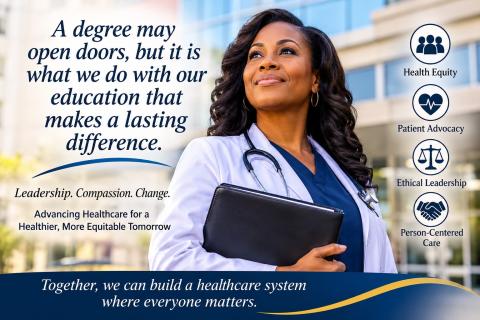
Beyond the Degree: Turning Healthcare Education Into Leadership, Compassion, and Change
By: Doctor of Healthcare Administration (DHA) Graduate
Introduction: More Than an Academic Achievement
Completing a DHA is more than just another degree. It's the culmination of years of hard work, sacrifice, learning, personal growth, and the realization of what it takes to serve people. Over the years, I've seen that healthcare is about so much more than running a hospital, hitting financial targets, or developing organizational policies. It's fundamentally about people.
My backgrounds in Criminal Justice, Special Education, and Healthcare Administration have all shaped my views on leadership, service, and advocacy. Each area has given me a different lens through which to view protecting individuals, pursuing fairness, and improving the systems that serve us.
My experience as a Developmental Disability Assistant Manager in the developmental disability sector has also informed my approach to healthcare leadership. Working with people who rely on others for day-to-day support has taught me that small things can make a huge difference to a person's quality of life. That experience has reinforced my belief that healthcare leaders must look beyond policy and procedure and see the person on the other end.
As I move forward in my healthcare admin career, I see my DHA not just as an academic exercise but as an opportunity to make a real difference in healthcare.
Leadership Begins With Understanding People
One of the most important things I've learned is that leadership isn't simply about having a job title or being responsible for an organization. It's about understanding people, listening to what they have to say, and making the right decisions in order to improve the quality of care.
Healthcare admin faces many problems: staffing issues, rising healthcare costs, regulatory burdens, difficulty retaining staff, and ever-increasing patient expectations. All of those are absolutely valid issues. What I think leaders must avoid, though, is getting so bogged down in day-to-day operations that they lose sight of the people receiving care.
A health organization can be financially sound, have the latest technology, and have well-written policies. But if you don't treat patients with dignity and support your staff, you're missing the point.
In my view, effective healthcare leadership balances organizational success with human needs. You have to be ready to listen, take ownership, address problems, and create an environment where people feel safe speaking up about what's going on.
Compassion isn't a weakness in leadership; it's an absolutely fundamental quality of good healthcare administration.
Giving a Voice to Vulnerable Populations
One area that matters to me is championing the interests of people who may not be able to speak up for themselves. That would be people with an intellectual and developmental disability, older people, and people who are reliant on others for help with day-to-day living.
Through my experience in the developmental disability field, I know good-quality care is much more than ticking boxes, doing paperwork, following a schedule, and so on. It's about meeting the individual's basic needs, providing the right level of support, ensuring a safe environment, and treating them with respect.
For instance, ensuring a resident has access to personal hygiene items, providing a meal when needed, or simply having someone to talk to about their day or problems may seem like a minor task. In reality, it can make a massive difference to a person's sense of dignity, comfort, and overall well-being.
We must never treat an individual receiving care as just another number in the organization's records. Each person has their own needs, preferences, rights, and goals.
Healthcare leaders need to create an organizational culture in which staff understand the importance of person-centered care. They also need to ensure that concerns about neglect, safety, staffing, or quality of service are taken seriously and addressed appropriately.
I think one of a healthcare leader's biggest responsibilities is to advocate for those whose voices might otherwise go unheard.
Making Healthcare More Accessible and Equitable
Another issue that absolutely warrants continued attention is healthcare inequality. Not everybody has the same access to quality healthcare. Income, disability, transport, education, where you live, and access to health insurance all shape whether you can get the care you need.
Healthcare equity means organizations must recognize these differences and act on them. That could involve supporting community health initiatives, improving access to preventive services, investing in workforce education, and developing policies that account for the needs of the most disadvantaged groups.
Henry et al. (2024) examined leadership development in health equity and stressed the need to prepare health professionals to address health inequities in their own organizations and in the communities they serve.
This study underscores my view that healthcare equity needs to be more than a line in the mission or vision statement. It needs to be embedded in day-to-day decisions, in how we treat our patients, how we allocate resources, and how we prioritize as an organization.
A person's financial situation, their age, or indeed their disability in no way should determine whether they are going to get compassionate and appropriate care.
As healthcare administrators, we can help to create systems that are more accessible, more inclusive, and more responsive to the communities we serve.
The Importance of Accountability and Quality of Care
Another key responsibility of healthcare leadership is maintaining accountability. The organization must ensure staff understand their responsibilities and are accountable for performing their duties in accordance with organizational policies.
Compliance shouldn't just be about avoiding penalties, avoiding being caught during an inspection, or protecting the organization's bottom line. It should protect the patient, the resident, the employee, and the system.
In my view, compliance and quality improvement go hand in hand. If you identify a problem, you need to do more than fix it. You need to figure out why it happened in the first place, decide whether you need more resources or more training, and then put in place the controls needed to ensure it doesn't happen again.
I think leaders have to create an environment where people feel safe reporting issues without fear of being 'got back'. Transparency, ethical decision-making, and accountability are essential to building trust.
Ultimately, a good compliance program helps the organization do the right thing, even when it's not easy or the easiest financially.
Preparing for the Future of Healthcare
Healthcare is constantly changing. Technological advances, AI, electronic health records, workforce issues, and rising healthcare costs create challenges and opportunities for administrators.
Future healthcare leaders will need to adapt, learn, and make responsible decisions. Technology can improve efficiency, support clinical decision-making, and improve patient outcomes. It should never replace the human element.
Healthcare organizations must also invest in their staff. Healthcare professionals need proper training, professional development opportunities, supportive leadership, and a work environment where they feel valued.
When staff feel supported, they are better positioned to deliver quality service to patients and residents. An organization that understands the importance of its workforce is better positioned to respond to the changing healthcare environment.
As someone interested in healthcare leadership and higher education, I'd like to help develop future healthcare professionals. Education should be about more than just teaching students how healthcare organizations work. It should help them understand the ethical, financial, social, and human responsibilities of leadership.
I hope to use my educational background and professional experience to instill in future leaders the ability to think critically, to lead responsibly, and to remain committed to the ongoing improvement of healthcare.
Conclusion: My Purpose Beyond the Degree
As I reflect on the journey I've taken to earn my Doctor of Healthcare Administration, I know this is not the end of the road. It's the start of another chapter.
I don't see the DHA as just a title to put after my name. I see it as an opportunity and a responsibility to use what I've learned to help people. I want to keep advocating for the most vulnerable, health professionals, ethical leadership, health equity, and organizations that put people at the heart of what they do.
My experience has shown me that leadership isn't just about how many people you have under your wing, the size of the organization, or the decisions you make in the boardroom. Leadership is about the lives you touch, what you care about, and the good you can achieve.
My biggest hope is that we are part of a generation of healthcare leaders who truly understand that good healthcare isn't simply about treating disease or running an organization. It's about caring for people, respecting their dignity, improving their quality of life, and making sure no one is left behind.
A degree can get you in the door, but what you do with your education, experience, and opportunities makes the difference.
References
Henry, E., Chandler, C., Laux, J., Noble, C. C., Corbie, G., Fernandez, C. S. P., & Dave, G. (2024). Evaluating leadership development competencies of clinicians to build health equity in America. J Contin Educ Health Prof, 44(2), 90-96. doi: 10.1097/CEH.0000000000000526
Karim, R. et al. (2025) Health care leaders’ experience with a multi-level intervention to reduce hypertension disparities: A qualitative analysis. Health Educ Behav, 52(1), 73-81. https://doi.org/10.1177/10901981241268156
Lee-Foon, N. K., Brown, A., & Reid, R. J. (2024). Shifting gears: Creating equity-informed leaders for effective learning health systems. Healthcare Management Forum, 37(3). https://doi.org/10.1177/08404704231214510
About the Author
The author holds a degree in Criminal Justice and Special Education and is currently pursuing a Doctor of Healthcare Administration (DHA). The author has professional experience in developmental disability services and healthcare operations. The author is passionate about healthcare leadership, patient advocacy, health equity, regulatory compliance, quality improvement, and person-centered care.
The author's professional interests include improving healthcare for the vulnerable, strengthening healthcare organizations, promoting ethical leadership, and educating and mentoring the next generation of healthcare professionals.
The author uses education, experience, and leadership to amplify voices that may not always be heard and help create a health service defined by dignity, accountability, compassion, and quality.
Beyond the Degree: Turning Healthcare Education Into Leadership, Compassion, and Change
By: Doctor of Healthcare Administration (DHA) Graduate
Introduction: More Than an Academic Achievement
Completing a DHA is more than just another degree. It's the culmination of years of hard work, sacrifice, learning, personal development, and a realization of what serving people demands. Over the years, I've seen that healthcare is about so much more than running a hospital, hitting financial targets, or developing organizational policies. It's fundamentally about people.
My backgrounds in Criminal Justice, Special Education, and Healthcare Administration have all shaped my views on leadership, service, and advocacy. Each area has given me a different lens through which to view protecting individuals, pursuing fairness, and improving the systems that serve us.
My experience as a Developmental Disability Assistant Manager in the developmental disability sector has also informed my approach to healthcare leadership. Working with people who rely on others for day-to-day support has taught me that small things can make a huge difference to a person's quality of life. That experience has reinforced my belief that healthcare leaders must look beyond policy and procedure to see the person on the other end.
As I move forward in my healthcare admin career, I see my PhD not just as an academic exercise, but as an opportunity to make a real difference in healthcare.
Leadership Begins With Understanding People
One of the most important things I've learned is that leadership isn't simply about having a job title or being responsible for an organization. It's about understanding people, listening to what they have to say, and making the right decisions in order to improve the quality of care.
Healthcare admin faces a host of problems: staffing issues, escalating healthcare costs, regulatory burdens, difficulty retaining staff, and ever-increasing patient expectations. All of those are absolutely valid issues. What I think leaders must avoid, though, is getting so bogged down in the day-to-day running of the organization that they lose sight of the people receiving care.
A health organization could be financially sound, have the latest technology, and have very well-written policies. The problem is that if you don't treat patients with dignity and support your staff, you're missing the point.
In my view, effective healthcare leadership balances organizational success with human needs. You have to be ready to listen, take ownership, address problems, and create an environment where people feel safe speaking up about what's going on.
Compassion isn't a weakness in leadership; it's a fundamental quality of good healthcare administration.
Giving a Voice to Vulnerable Populations
One area that matters to me is championing the interests of people who may not be able to speak up for themselves. That would be people with an intellectual and developmental disability, older people, and people who are reliant on others for help with day-to-day living.
Through my experience in the developmental disability field, I know good-quality care is so much more than ticking boxes, doing paperwork, following the schedule, and so on. It's about ensuring the individual's basic needs are met, they have the right level of support, a safe environment, and are treated with respect.
For instance, ensuring a resident has access to personal hygiene items, providing a meal if they need it, or simply having someone to talk to about their day or problems may seem like a very minor task. In reality, it can make a massive difference to a person's sense of dignity, comfort, and general well-being.
We must never treat an individual receiving care as just another number in the organization's records. Each person has their own needs, preferences, rights, and goals.
Healthcare leaders need to create an organizational culture where staff understand the importance of person-centered care. They also need to ensure that concerns about neglect, safety, staffing, or quality of service are taken seriously and addressed appropriately.
I think one of a healthcare leader's biggest responsibilities is to advocate for those whose voices might otherwise go unheard.
Making Healthcare More Accessible and Equitable
Another issue that absolutely warrants continued attention is healthcare inequality. Not everybody has the same access to quality healthcare. Income, disability, transport, education, where you live, and access to health insurance all shape whether you can get the care you need.
Healthcare equity means organizations must recognize these differences and act on them. That could involve supporting community health initiatives, improving access to preventive services, investing in workforce education, and developing policies that account for the needs of the most disadvantaged groups.
Henry et al. (2024) examined leadership development in health equity and stressed the need to prepare health professionals to address health inequities in their own organizations and in the communities they serve.
This study underscores my view that healthcare equity needs to be more than a line in the mission or vision statement. It needs to be embedded in day-to-day decisions, in how we treat our patients, how we allocate resources, and how we prioritize as an organization.
A person's financial situation, their age, or indeed their disability in no way should determine whether they are going to get compassionate and appropriate care.
As healthcare administrators, we can build systems that are more accessible, inclusive, and responsive to the communities we serve.
The Importance of Accountability and Quality of Care
Another key responsibility of healthcare leadership is maintaining accountability. The organization must ensure staff understand their responsibilities and are accountable for performing their duties in accordance with organizational policy.
Compliance shouldn't just be about avoiding penalties, avoiding being caught during an inspection, or protecting the organization's bottom line. It should be about protecting the patient, the resident, the employee, and the system.
In my view,w compliance and quality improvement go hand in hand. If you identify a problem,em you need to do more than fix it. You need to understand why it happened in the first place, decide whether you need more resources or more training, and then put the necessary controls in place to ensure it doesn't happen again.
I think leaders have to create an environment where people feel safe reporting issues without fear of being 'got back'. Transparency, ethical decision-making, and accountability are all essential to building trust.
Ultimately, a good compliance program helps the organization do the right thing, even when it's not easy or the easiest from a financial perspective.
Preparing for the Future of Healthcare
Healthcare is in constant flux. Technological advances, AI, electronic health records, workforce issues, and escalating healthcare costs are creating challenges and opportunities for administrators.
Future healthcare leaders will need to adapt, learn, and make responsible decisions. Technology can improve efficiency, support clinical decision-making, and improve patient outcomes. It should never replace the human element.
Healthcare organizations must also invest in their staff. Healthcare professionals need proper training, professional development opportunities, supportive leadership, and a work environment where they feel valued.
When staff feel supported, they are better positioned to deliver quality service to patients and residents. An organization that understands the importance of its workforce is better positioned to respond to the changing healthcare environment.
As someone interested in healthcare leadership and higher education, I'd like to help develop future healthcare professionals. Education should be about more than just teaching students how healthcare organizations work. It should help them understand the ethical, financial, social, and human responsibilities of leadership.
I hope to use my educational background and professional experience to instill in future leaders the ability to think critically, lead responsibly, and remain committed to the ongoing improvement of healthcare.
Conclusion: My Purpose Beyond the Degree
As I reflect on the journey I've taken to earn my Doctor of Healthcare Administration, I know this is not the end of the road. It's the start of another chapter.
I don't see the DHA as just a title to put after my name. I see it as an opportunity and a responsibility to use what I've learned to help people. I want to keep advocating for the most vulnerable, health professionals, ethical leadership, health equity, and organizations that put people at the heart of what they do.
My experience has shown me that leadership isn't just about how many people you have under your wing, the size of the organization, or the decisions you make in the boardroom. Leadership is about the lives you touch, what you care about, and the good you can achieve.
My biggest hope is that we are part of a generation of healthcare leaders who truly understand that good healthcare isn't simply about treating disease or running an organization. It's about caring for people, respecting their dignity, improving their quality of life, and making sure no one is left behind.
A degree can get you in the door, but what you do with your education, experience, and opportunities makes the difference.
References
Henry, E., Chandler, C., Laux, J., Noble, C. C., Corbie, G., Fernandez, C. S. P., & Dave, G. (2024). Evaluating leadership development competencies of clinicians to build health equity in America. J Contin Educ Health Prof, 44(2), 90-96. doi: 10.1097/CEH.0000000000000526
Karim, R. et al. (2025) Health care leaders’ experience with a multi-level intervention to reduce hypertension disparities: A qualitative analysis. Health Educ Behav, 52(1), 73-81. https://doi.org/10.1177/10901981241268156
Lee-Foon, N. K., Brown, A., & Reid, R. J. (2024). Shifting gears: Creating equity-informed leaders for effective learning health systems. Healthcare Management Forum, 37(3). https://doi.org/10.1177/08404704231214510
About the Author
The author holds a degree in Criminal Justice and Special Education and is currently pursuing a Doctor of Healthcare Administration (DHA). The author has professional experience in developmental disability services and healthcare operations. The author is passionate about healthcare leadership, patient advocacy, health equity, regulatory compliance, quality improvement, and person-centered care.
The author's professional interests include improving healthcare for the vulnerable, strengthening healthcare organizations, promoting ethical leadership, and educating and mentoring the next generation of healthcare professionals.
The author uses education, experience, and leadership to amplify voices that may not always be heard and help create a health service defined by dignity, accountability, compassion, and quality.
Beyond the Degree: Turning Healthcare Education Into Leadership, Compassion, and Change
By: Doctor of Healthcare Administration (DHA) Graduate
Introduction: More Than an Academic Achievement
Completing a DHA is more than just another degree. It's the culmination of years of hard work, sacrifice, learning, personal development, and a realization of just how much the role of serving people demands. Over the years, I've seen that healthcare is about so much more than running a hospital, hitting financial targets, or developing organizational policies. It's fundamentally about people.
My backgrounds in Criminal Justice, Special Education, and Healthcare Administration have all shaped my views on leadership, service, and advocacy. Each area has given me a different lens through which to view protecting individuals, pursuing fairness, and improving the systems that serve us.
My experience as a Developmental Disability Assistant Manager in the developmental disability sector has also informed my approach to healthcare leadership. Working with people who rely on others for day-to-day support has taught me that small things can make a huge difference to a person's quality of life. That experience has reinforced my belief that healthcare leaders must look beyond policy and procedure and see the person on the other end.
As I go forward in my healthcare admin career, I see my PhD not just as an academic exercise, but as an opportunity to make a real difference in healthcare.
Leadership Begins With Understanding People
One of the most important things I've learned is that leadership isn't simply about having a job title or being responsible for an organization. It's about understanding people, listening to what they have to say, and making the right decisions to improve care quality.
Healthcare admin faces a host of problems: staffing issues, escalating healthcare costs, regulatory burdens, difficulty retaining staff, and ever-increasing patient expectations. All of those are absolutely valid issues. What I think leaders must avoid, though, is getting so bogged down in the day-to-day running of the organization that they lose sight of the people receiving care.
A health organization could be financially sound, have the latest technology, and have very well-written policies. The problem is that if you don't treat patients with dignity and support your staff, you're missing the point.
In my view, effective healthcare leadership balances organizational success with human needs. You have to be ready to listen, take ownership, address problems, and create an environment where people feel safe speaking up about what's going on.
Compassion isn't a weakness in leadership; it's a fundamental quality of good healthcare administration.
Giving a Voice to Vulnerable Populations
One area that matters to me is championing the interests of people who may not be able to speak up for themselves. That would be people with an intellectual and developmental disability, older people, and people who are reliant on others for help with day-to-day living.
Through my experience in the developmental disability field, I know good-quality care is so much more than ticking boxes, doing paperwork, following the schedule, and so on. It's about ensuring the individual's basic needs are met, they have the right level of support, a safe environment, and are treated with respect.
For instance, ensuring a resident has access to personal hygiene items, providing a meal if they need it, or simply having someone to talk to about their day or problems may seem like a minor task. In reality, it can make a massive difference to a person's sense of dignity, comfort, and general well-being.
We must never treat an individual receiving care as just another number in theorganization'ss records. Every individual has their own needs, preferences, rights,s and personal goals.
Healthcare leaders need to create an organizational culture where staff understand the importance of person-centered care. They also need to ensure that concerns about neglect, safety, staffing, or quality of service are taken seriously and addressed appropriately.
I think one of a healthcare leader's biggest responsibilities is to advocate for those whose voices might otherwise go unheard.
Making Healthcare More Accessible and Equitable
Another issue that absolutely warrants continued attention is healthcare inequality. Not everybody has the same access to quality healthcare. Income, disability, transportation, education, where you live, and access to health insurance all shape whether you can get the care you need.
Healthcare equity means organizations must recognize these differences and act on them. That could involve supporting community health initiatives, improving access to preventive services, investing in workforce education, and developing policies that account for the needs of the most disadvantaged groups.
Henry et al. (2024) examined leadership development in health equity and stressed the need to prepare health professionals to address health inequities in their own organizations and the communities they serve.
This study underscores my view that healthcare equity needs to be more than a line in the mission or vision statement. It needs to be embedded in day-to-day decisions, in how we treat our patients, how we allocate resources, and how we prioritize as an organization.
A person's financial situation, their age, or indeed their disability in no way should determine whether they are going to get compassionate and appropriate care.
As healthcare administrators, we can build systems that are more accessible, inclusive, and responsive to the communities we serve.
The Importance of Accountability and Quality of Care
Another key responsibility of healthcare leadership is maintaining accountability. The organization must ensure staff understand their responsibilities and are accountable for performing their duties in accordance with organizational policies.
Compliance shouldn't just be about avoiding penalties, avoiding being caught during an inspection, or protecting the organization's bottom line. It should protect the patient, the resident, the employee, and the system.
In my view, compliance and quality improvement go hand in hand. If you identify a problem,m you need to do more than fix it. You need to understand why it happened in the first place, decide whether you need more resources or more training, and then put the necessary controls in place to ensure it doesn't happen again.
I think leaders have to create an environment where people feel safe reporting issues without fear of being 'got back at '. Transparency, ethical decision-making, and accountability are essential to building trust.
Ultimately, a good compliance program helps the organization do the right thing, even when it's not easy or the easiest financially.
Preparing for the Future of Healthcare
Healthcare is constantly changing. Technological advances, AI, electronic health records, workforce issues, and escalating healthcare costs are creating challenges and opportunities for administrators.
Future healthcare leaders will need to adapt, learn, and make responsible decisions. Technology can improve efficiency, support clinical decision-making, and improve patient outcomes. It should never replace the human element.
I also think healthcare organizations must invest in their staff. Healthcare professionals need proper training, professional development opportunities, supportive leadership, and a work environment where they feel valued.
When staff feel supported, they are better positioned to deliver quality service to patients and residents. An organization that understands the importance of its workforce is better positioned to respond to the changing healthcare environment.
As someone interested in healthcare leadership and higher education, I'd like to help develop future healthcare professionals. Education should be about more than just teaching students how healthcare organizations work. It should help them understand the ethical, financial, social, and human responsibilities of leadership.
I hope to use my educational background and professional experience to instill in future leaders the ability to think critically, lead responsibly, and remain committed to the ongoing improvement of healthcare.
Conclusion: My Purpose Beyond the Degree
As I reflect on the journey I've taken to earn my Doctor of Healthcare Administration, I know this is not the end of the road. It's the start of another chapter.
I don't see the DHA as just a title to put after my name. I see it as an opportunity and a responsibility to use what I've learned to help people. I want to keep advocating for the most vulnerable, health professionals, ethical leadership, health equity, and organizations that put people at the heart of what they do.
My experience has shown me that leadership isn't just about how many people you have in the organization, or the decisions you make in the boardroom. Leadership is about the lives you touch, what you care about, and the good you can achieve.
My biggest hope is that we are part of a generation of healthcare leaders who truly understand that good healthcare isn't simply about treating disease or running an organization. It's about caring for people, respecting their dignity, improving their quality of life, and making sure no one is left behind.
A degree can get you in the door, but what you do with your education, experience, and opportunities makes the difference.
References
Henry, E., Chandler, C., Laux, J., Noble, C. C., Corbie, G., Fernandez, C. S. P., & Dave, G. (2024). Evaluating leadership development competencies of clinicians to build health equity in America. J Contin Educ Health Prof, 44(2), 90-96. doi: 10.1097/CEH.0000000000000526
Karim, R. et al. (2025) Health care leaders’ experience with a multi-level intervention to reduce hypertension disparities: A qualitative analysis. Health Educ Behav, 52(1), 73-81. https://doi.org/10.1177/10901981241268156
Lee-Foon, N. K., Brown, A., & Reid, R. J. (2024). Shifting gears: Creating equity-informed leaders for effective learning health systems. Healthcare Management Forum, 37(3). https://doi.org/10.1177/08404704231214510
About the Author
The author holds a degree in Criminal Justice and Special Education and is currently pursuing a Doctor of Healthcare Administration (DHA). The author has professional experience in developmental disability services and healthcare operations. The author is passionate about healthcare leadership, patient advocacy, health equity, regulatory compliance, quality improvement, and person-centered care.
The author's professional interests include improving healthcare for vulnerable populations, strengthening healthcare organizations, promoting ethical leadership, and educating and mentoring the next generation of healthcare professionals.
The author uses education, experience, and leadership to speak up for people whose voices may not always be heard and to help create a health service defined by dignity, accountability, compassion, and quality.
Beyond the Degree: Turning Healthcare Education Into Leadership, Compassion, and Change
By: Doctor of Healthcare Administration (DHA) Graduate
Introduction: More Than an Academic Achievement
Completing a DHA is more than just another degree. It's the culmination of years of hard work, sacrifice, learning, personal development, and a realization of what serving people demands. Over the years, I've seen that healthcare is about so much more than running a hospital, hitting financial targets, or developing organizational policies. It's fundamentally about people.
My background in Criminal Justice, Special Education, and Healthcare Administration has shaped my views on leadership, service, and advocacy. Each area has given me a different lens for protecting individuals, pursuing fairness, and improving the systems that serve us.
My experience as a Developmental Disability Assistant Manager in the developmental disability sector has also shaped my approach to healthcare leadership. Working with people who rely on others for day-to-day support has taught me that the small things can make a huge difference to a person's quality of life. That experience has reinforced my belief that healthcare leaders must look beyond policy and procedure and see the person on the other end.
As I move forward in my healthcare admin career, I see my PhD not just as an academic exercise but as an opportunity to make a real difference in healthcare.
Leadership Begins With Understanding People
One of the most important things I've learned is that leadership isn't simply about having a job title or being responsible for an organization. It's about understanding people, listening to what they have to say, and making the right decisions to improve care quality.
Healthcare admin faces a host of problems: staffing issues, escalating healthcare costs, regulatory burdens, difficulty retaining staff, and ever-increasing patient expectations. All of those are absolutely valid issues. What I think leaders must avoid, though, is getting so bogged down in the day-to-day running of the organization that they lose sight of the people receiving care.
A health organization could be financially sound, have the latest technology, and have very well-written policies. The problem is that if you don't treat patients with dignity and support your staff, you're missing the point.
In my view, effective healthcare leadership balances organizational success with human needs. You have to be ready to listen, take ownership, address problems, and create an environment where people feel safe speaking up about what's going on.
Compassion isn't a weakness in leadership; it's a fundamental quality of good healthcare administration.
Giving a Voice to Vulnerable Populations
One area that matters to me is championing the interests of people who may not be able to speak up for themselves. That would be people with an intellectual and developmental disability, older people, and people who are reliant on others for help with day-to-day living.
Through my experience in the developmental disability field, I know good-quality care is so much more than ticking boxes, doing paperwork, following the schedule, and so on. It's about ensuring the individual's basic needs are met, they have the right level of support, a safe environment, and are treated with respect.
For instance, ensuring a resident has access to personal hygiene items, providing a meal if they need it, or simply having someone to talk to about their day or problems may seem like a minor task. In reality, it can make a massive difference to a person's sense of dignity, comfort, and general well-being.
We must never treat an individual receiving care as just another number in the organization's records. Each person has their own needs, preferences, rights, and goals.
Healthcare leaders need to create an organizational culture where staff understand the importance of person-centered care. They also need to ensure that concerns about neglect, safety, staffing, or quality of service are taken seriously and addressed appropriately.
I think one of a healthcare leader's biggest responsibilities is to advocate for those whose voices might otherwise go unheard.
Making Healthcare More Accessible and Equitable
Another issue that absolutely warrants continued attention is healthcare inequality. Not everybody has the same access to quality healthcare. Income, disability, transport, education, where you live, and access to health insurance all shape whether you can get the care you need.
Healthcare equity means organizations must recognize these differences and act on them. That could involve supporting community health initiatives, improving access to preventive services, investing in workforce education, and developing policies that account for the needs of the most disadvantaged groups.
Henry et al. (2024) examined leadership development in health equity and stressed the need to prepare health professionals to address health inequities in their own organizations and in the communities they serve.
This study underscores my view that healthcare equity needs to be more than a line in the mission or vision statement. It needs to be embedded in day-to-day decisions, in how we treat our patients, how we allocate resources, and how we prioritize as an organization.
A person's financial situation, their age, or indeed their disability in no way should determine whether they are going to get compassionate and appropriate care.
As healthcare administrators, we can build systems that are more accessible, inclusive, and responsive to the communities we serve.
The Importance of Accountability and Quality of Care
Another key responsibility of healthcare leadership is maintaining accountability. The organization must ensure staff understand their responsibilities and are accountable for performing their duties in accordance with organizational policies.
Compliance shouldn't just be about avoiding penalties, avoiding being caught during an inspection, or protecting the organization's bottom line. It should be about protecting the patient, the resident, the employee, and the system.
In my view,w compliance and quality improvement go hand in hand. If you identify a problem,em you need to do more than fix it. You need to understand why it happened in the first place, decide whether you need more resources or more training, and then put the necessary controls in place to ensure it doesn't happen again.
I think leaders have to create an environment where people feel safe reporting issues without fear of being 'got back at '. Transparency, ethical decision-making, and accountability are essential to building trust.
Ultimately, a good compliance program helps the organization do the right thing, even when it's not easy or the easiest financially.
Preparing for the Future of Healthcare
Healthcare is constantly changing. Technological advances, AI, electronic health records, workforce issues, and escalating healthcare costs are creating challenges and opportunities for administrators.
Future healthcare leaders will need to adapt, learn, and make responsible decisions. Technology can improve efficiency, support clinical decision-making, and improve patient outcomes. It should never replace the human element.
I also think healthcare organizations must invest in their staff. Healthcare professionals need proper training, professional development opportunities, supportive leadership, and a work environment where they feel valued.
When staff feel supported, they are better positioned to deliver quality service to patients and residents. An organization that understands the importance of its workforce is better positioned to respond to the changing healthcare environment.
As someone interested in healthcare leadership and higher education, I want to help develop future healthcare professionals. Education should be about more than just teaching students how healthcare organizations work. It should help them understand the ethical, financial, social, and human responsibilities of leadership.
I hope to use my educational background and professional experience to instill in future leaders the ability to think critically, lead responsibly, and remain committed to the ongoing improvement of healthcare.
Conclusion: My Purpose Beyond the Degree
As I reflect on the journey I've taken to earn my Doctor of Healthcare Administration, I know this is not the end of the road. It's the start of another chapter.
I don't see the DHA as just a title to put after my name. I see it as an opportunity and a responsibility to use what I've learned to help people. I want to keep advocating for the most vulnerable, health professionals, ethical leadership, health equity, and organizations that put people at the heart of what they do.
My experience has shown me that leadership isn't just about how many people you have under your wing, the size of the organization, or the decisions you make in the boardroom. Leadership is about the lives you touch, what you care about, and the good you can achieve.
My biggest hope is that we are part of a generation of healthcare leaders who truly understand that good healthcare isn't simply about treating disease or running an organization. It's about caring for people, respecting their dignity, improving their quality of life, and making sure no one is left behind.
A degree can get you in the door, but what you do with your education, experience, and opportunities makes the difference.
References
Henry, E., Chandler, C., Laux, J., Noble, C. C., Corbie, G., Fernandez, C. S. P., & Dave, G. (2024). Evaluating leadership development competencies of clinicians to build health equity in America. J Contin Educ Health Prof, 44(2), 90-96. doi: 10.1097/CEH.0000000000000526
Karim, R. et al. (2025) Health care leaders’ experience with a multi-level intervention to reduce hypertension disparities: A qualitative analysis. Health Educ Behav, 52(1), 73-81. https://doi.org/10.1177/10901981241268156
Lee-Foon, N. K., Brown, A., & Reid, R. J. (2024). Shifting gears: Creating equity-informed leaders for effective learning health systems. Healthcare Management Forum, 37(3). https://doi.org/10.1177/08404704231214510
About the Author
The author holds a degree in Criminal Justice and Special Education and is currently pursuing a Doctor of Healthcare Administration (DHA). The author has professional experience in developmental disability services and healthcare operations. The author is passionate about healthcare leadership, patient advocacy, health equity, regulatory compliance, quality improvement, and person-centered care.
The author's professional interests include improving healthcare for the vulnerable, strengthening healthcare organizations, promoting ethical leadership, and educating and mentoring the next generation of healthcare professionals.
The author uses education, experience, and leadership to amplify voices that may not always be heard and help create a health service defined by dignity, accountability, compassion, and quality.
Beyond the Degree: Turning Healthcare Education Into Leadership, Compassion, and Change
By: Doctor of Healthcare Administration (DHA) Graduate
Introduction: More Than an Academic Achievement
Completing a DHA is more than just another degree. It's the culmination of years of hard work, sacrifice, learning, personal development, and a realization of what serving people demands. Over the years, I've seen that healthcare is about so much more than running a hospital, hitting financial targets, or developing organizational policies. It's fundamentally about people.
My backgrounds in Criminal Justice, Special Education, and Healthcare Administration have all shaped my views on leadership, service, and advocacy. Each area has given me a different lens through which to view protecting individuals, pursuing fairness, and improving the systems that serve us.
My experience as a Developmental Disability Assistant Manager in the developmental disability sector has also informed my approach to healthcare leadership. Working with people who rely on others for day-to-day support has taught me that small things can make a huge difference to a person's quality of life. That experience has reinforced my belief that healthcare leaders must look beyond policy and procedure and see the person on the other end.
As I move forward in my healthcare admin career, I see my PhD not just as an academic exercise, but as an opportunity to make a real difference in healthcare.
Leadership Begins With Understanding People
One of the most important things I've learned is that leadership isn't simply about having a job title or being responsible for an organization. It's about understanding people, listening to what they have to say, and making the right decisions to improve care quality.
Healthcare admin faces a host of problems: staffing issues, escalating healthcare costs, regulatory burdens, difficulty retaining staff, and ever-increasing patient expectations. All of those are absolutely valid issues. What I think leaders have to watch out for, though, is getting so bogged down in the day-to-day running of the organization that they lose sight of the people actually receiving care.
A health organization could be financially sound, have the latest technology, and have very well-written policies. The problem is that if you don't treat patients with dignity and support your staff, you're missing the point.
In my view,, effective healthcare leadership balances organizational successandh human need equallys. You have to be prepared to listen, take ownership, deal with problems, and create an environment where people feel safe speaking up about what's going on.
Compassion isn't a weakness in leadership; it's a fundamental quality of good healthcare administration.
Giving a Voice to Vulnerable Populations
One area that matters to me is championing the interests of people who may not be able to speak up for themselves. That would be people with an intellectual and developmental disability, older people, and people who are reliant on others for help with day-to-day living.
Through my experience in the developmental disability field, I know that good-quality care is so much more than ticking boxes, doing paperwork, following the schedule, and so on. It's about ensuring the individual's basic needs are met, they have the right level of support, a safe environment, and are treated with respect.
For instance, ensuring a resident has access to personal hygiene items, providing a meal if they need it, or simply having someone to talk to about their day or problems may seem like a minor task. In reality, it can make a massive difference to a person's sense of dignity, comfort, and general well-being.
We must never treat an individual receiving care as just another number in the organization's records. Each person has their own needs, preferences, rights, and goals.
Healthcare leaders need to build an organizational culture that emphasizes person-centered care. They also need to ensure that any concerns about neglect, safety, staffing, or quality of service are taken seriously and addressed appropriately.
I think one of a healthcare leader's biggest responsibilities is to advocate for those whose voices might otherwise go unheard.
Making Healthcare More Accessible and Equitable
Another issue that absolutely warrants continued attention is healthcare inequality. Not everybody has the same access to quality healthcare. Income, disability, transport, education, where you live, and access to health insurance all shape whether you can get the care you need.
Healthcare equity means organizations must recognize these differences and act on them. That could involve supporting community health initiatives, improving access to preventive services, investing in workforce education, and developing policies that account for the needs of the most disadvantaged groups.
Henry et al. (2024) examined leadership development in health equity and stressed the need to prepare health professionals to address health inequities in their own organizations and in the communities they serve.
This study underscores my view that healthcare equity needs to be more than a line in the mission or vision statement. It needs to be embedded in day-to-day decisions, in how we treat our patients, how we allocate resources, and how we prioritize as an organization.
A person's financial situation, their age, or indeed their disability in no way should determine whether they are going to get compassionate and appropriate care.
As healthcare administrators, we can help to create systems that are more accessible, more inclusive, and more responsive to the communities we serve.
The Importance of Accountability and Quality of Care
Another key responsibility of healthcare leadership is maintaining accountability. The organization must ensure staff understand their responsibilities and are accountable for performing their duties in accordance with organizational policy.
Compliance shouldn't just be about avoiding penalties, avoiding being caught during an inspection, or protecting the organization's bottom line. It should protect the patient, the resident, the employee, and the system.
In my view, compliance and quality improvement go hand in hand. If you identify a problem,m you need to do more than fix it. You need to understand why it happened in the first place, decide whether you need more resources or more training, and then put the necessary controls in place to ensure it doesn't happen again.
I think leaders have to create an environment where people feel safe reporting issues without fear of being 'got back at '. Transparency, ethical decision-making, and accountability are essential to building trust.
Ultimately, a good compliance program helps the organization do the right thing, even when it's not easy or the easiest from a financial perspective.
Preparing for the Future of Healthcare
Healthcare is in constant flux. Technological advances, AI, electronic health records, workforce issues, and escalating healthcare costs are creating challenges and opportunities for administrators.
Future healthcare leaders will need to adapt, learn, and make responsible decisions. Technology can improve efficiency, support clinical decision-making, and improve patient outcomes. It should never replace the human element.
I also think healthcare organizations must invest in their staff. Healthcare professionals need proper training, professional development opportunities, supportive leadership, and a work environment where they feel valued.
When staff feel supported, they are better positioned to deliver quality service to patients and residents. An organization that understands the importance of its workforce is better positioned to respond to the changing healthcare environment.
As someone interested in healthcare leadership and higher education, I want to help develop future healthcare professionals. Education should be about more than just teaching students how healthcare organizations work. It should help them understand the ethical, financial, social, and human responsibilities of leadership.
I hope to use my educational background and professional experience to instill in future leaders the ability to think critically, lead responsibly, and remain committed to the ongoing improvement of healthcare.
Conclusion: My Purpose Beyond the Degree
As I reflect on the journey I've taken to earn my Doctor of Healthcare Administration, I know this is not the end of the road. It's the start of another chapter.
I don't see the DHA as just a title to put after my name. I see it as an opportunity and a responsibility to use what I've learned to help people. I want to keep advocating for the most vulnerable, health professionals, ethical leadership, health equity, and organizations that put people at the heart of what they do.
My experience has shown me that leadership isn't just about how many people you have under your wing, the size of the organization, or the decisions you make in the boardroom. Leadership is about the lives you touch, what you care about, and the good you can achieve.
My biggest hope is that we are part of a generation of healthcare leaders who truly understand that good healthcare isn't simply about treating disease or running an organization. It's about caring for people, respecting their dignity, improving their quality of life, and making sure no one is left behind.
A degree can get you in the door, but what you do with your education, experience, and opportunities makes the difference.
References
Henry, E., Chandler, C., Laux, J., Noble, C. C., Corbie, G., Fernandez, C. S. P., & Dave, G. (2024). Evaluating leadership development competencies of clinicians to build health equity in America. J Contin Educ Health Prof, 44(2), 90-96. doi: 10.1097/CEH.0000000000000526
Karim, R. et al. (2025) Health care leaders’ experience with a multi-level intervention to reduce hypertension disparities: A qualitative analysis. Health Educ Behav, 52(1), 73-81. https://doi.org/10.1177/10901981241268156
Lee-Foon, N. K., Brown, A., & Reid, R. J. (2024). Shifting gears: Creating equity-informed leaders for effective learning health systems. Healthcare Management Forum, 37(3). https://doi.org/10.1177/08404704231214510
About the Author
The author holds a degree in Criminal Justice and Special Education and is currently pursuing a Doctor of Healthcare Administration (DHA). The author has professional experience in developmental disability services and healthcare operations. The author is passionate about healthcare leadership, patient advocacy, health equity, regulatory compliance, quality improvement, and person-centered care.
The author's professional interests include improving healthcare for vulnerable people, strengthening healthcare organizations, promoting ethical leadership, and educating and mentoring the next generation of healthcare professionals.
The author uses education, experience, and leadership to speak up for people whose voices may not always be heard and to help create a health service defined by dignity, accountability, compassion, and quality.
Beyond the Degree: Turning Healthcare Education Into Leadership, Compassion, and Change
By: Doctor of Healthcare Administration (DHA) Graduate
Introduction: More Than an Academic Achievement
Completing a DHA is more than just another degree. It's the culmination of years of hard work, sacrifice, learning, personal growth, and realizing what it takes to serve people. Over the past year, I've seen that healthcare is about so much more than running a hospital, hitting financial targets, or developing organizational policies. It's fundamentally about people.
My background in Justice, Special Education, and Healthcare Administration has shaped my views on leadership, service, and advocacy. Each area has given me a different lens for protecting individuals, pursuing fairness, and improving the systems that serve us.
My experience as a Developmental Disability Assistant Manager in the developmental disability sector has also shaped my approach to healthcare leadership. Working with people who rely on others for day-to-day support has taught me that small things can make a huge difference in a person's quality of life. That experience has reinforced my belief that healthcare leaders must look beyond policy and procedure and see the person at the other end.
As I move forward in my healthcare admin career, I see my PhD not just as an academic exercise, but as an opportunity to make a real difference in healthcare.
Leadership Begins With Understanding People
One of the most important things I've learned is that leadership isn't simply about having a job title or being responsible for an organization. It's about understanding people, listening to what they have to say, and making the right decisions in order to improve the quality of care.
Healthcare admin faces many problems: staffing issues, rising healthcare costs, regulatory burdens, difficulty retaining staff, and ever-increasing patient expectations. All of those are absolutely valid issues. What I think leaders must avoid, though, is getting so bogged down in day-to-day operations that they lose sight of the people receiving care.
A health organization could be financially sound, have the latest technology, and have very well-written policies. The problem is that if you don't treat patients with dignity and support your staff, you're missing the point.
In my view, effective healthcare leadership balances organizational success with human needs. You have to be prepared to listen, take ownership, address problems, and create an environment where people feel safe speaking up about what's going on.
Compassion isn't a weakness in leadership; it's a fundamental quality of good healthcare administration.
Giving a Voice to Vulnerable Populations
One area that matters to me is championing the interests of people who may not be able to speak up for themselves. That would be people with an intellectual and developmental disability, older people, and people who are reliant on others for help with day-to-day living.
Through my experience in the developmental disability field, I know good-quality care is so much more than ticking boxes, doing paperwork, following the schedule, and so on. It's about meeting the individual's basic needs, providing the right level of support, ensuring a safe environment, and showing respect.
For instance, ensuring a resident has access to personal hygiene items, providing a meal if they need it, or simply having someone to talk to about their day or problems may seem like a minor task. In reality, it can make a massive difference to a person's sense of dignity, comfort, and general well-being.
We must never treat an individual receiving care as just another number in the organization's records. Each person has their own needs, preferences, rights, and goals.
Healthcare leaders need to create an organizational culture where staff understand the importance of person-centered care. They also need to ensure that concerns about neglect, safety, staffing, or quality of service are taken seriously and addressed appropriately.
I think one of a healthcare leader's biggest responsibilities is to advocate for those whose voices might otherwise go unheard.
Making Healthcare More Accessible and Equitable
Another issue that absolutely warrants continued attention is healthcare inequality. Not everybody has the same access to quality healthcare. Income, disability, transport, education, where you live, and access to health insurance all shape whether you can get the care you need.
Healthcare equity means organizations must recognize these differences and act on them. That could involve supporting community health initiatives, improving access to preventive services, investing in workforce education, and developing policies that account for the needs of the most disadvantaged groups.
Henry et al. (2024) examined leadership development in health equity and stressed the need to prepare health professionals to address health inequities in their own organizations and in the communities they serve.
This study underscores my view that healthcare equity needs to be more than a line in the mission or vision statement. It needs to be embedded in day-to-day decisions, in how we treat our patients, how we allocate resources, and how we prioritize as an organization.
A person's financial situation, their age, or indeed their disability in no way should determine whether they are going to get compassionate and appropriate care.
As healthcare administrators, we can build systems that are more accessible, inclusive, and responsive to the communities we serve.
The Importance of Accountability and Quality of Care
Another key responsibility of healthcare leadership is maintaining accountability. The organization must ensure staff understand their responsibilities and are accountable for performing their duties in accordance with organizational policies.
Compliance shouldn't just be about avoiding penalties, avoiding being caught during an inspection, or protecting the organization's bottom line. It should be about protecting the patient, the resident, the employee, and the system.
In my view,w compliance and quality improvement go hand in hand. If you identify a problem, you need to do more than fix it. You need to understand why it happened in the first place, decide whether you need more resources or more training, and then put the necessary controls in place to ensure it doesn't happen again.
I think leaders have to create an environment where people feel safe reporting issues without fear of being 'got back at '. Transparency, ethical decision-making, and accountability are essential to building trust.
Ultimately, a good compliance program helps the organization do the right thing, even when it's not easy or the easiest financially.
Preparing for the Future of Healthcare
Healthcare is in constant flux. Technological advances, AI, electronic health records, workforce issues, and escalating healthcare costs are creating challenges and opportunities for administrators.
Future healthcare leaders will need to adapt, learn,n and make responsible decisions. Technology can improve efficiency, support clinical decision-making, and improve patient outcomes. It should never replace the human element.
Healthcare organizations must also invest in their staff. Healthcare professionals need proper training, professional development opportunities, supportive leadership, and a work environment where they feel valued.
When staff feel supported, they are better positioned to deliver quality service to patients and residents. An organization that understands the importance of its workforce is better positioned to respond to the changing healthcare environment.
As someone interested in healthcare leadership and higher education, I want to help develop future healthcare professionals. Education should be about more than just teaching students how healthcare organizations work. It should help them understand the ethical, financial, social, and human responsibilities of leadership.
I hope to use my educational background and professional experience to instill in future leaders the ability to think critically, lead responsibly, and remain committed to the ongoing improvement of healthcare.
Conclusion: My Purpose Beyond the Degree
As I reflect on the journey I've taken to earn my Doctor of Healthcare Administration, I know this is not the end of the road. It's the start of another chapter.
I don't see the DHA as just a title to put after my name. I see it as an opportunity and a responsibility to use what I've learned to help people. I want to keep advocating for the most vulnerable, health professionals, ethical leadership, health equity, and organizations that put people at the heart of what they do.
My experience has shown me that leadership isn't just about how many people you have under your wing, the size of the organization, or the decisions you make in the boardroom. Leadership is about the lives you touch, what you care about, and the good you can achieve.
My biggest hope is that we are part of a generation of healthcare leaders who truly understand that good healthcare isn't simply about treating disease or running an organization. It's about caring for people, respecting their dignity, improving their quality of life, and making sure no one is left behind.
A degree can get you in the door, but what you do with your education, experience, and opportunities makes the difference.
References
Henry, E., Chandler, C., Laux, J., Noble, C. C., Corbie, G., Fernandez, C. S. P., & Dave, G. (2024). Evaluating leadership development competencies of clinicians to build health equity in America. J Contin Educ Health Prof, 44(2), 90-96. doi: 10.1097/CEH.0000000000000526
Karim, R. et al. (2025) Health care leaders’ experience with a multi-level intervention to reduce hypertension disparities: A qualitative analysis. Health Educ Behav, 52(1), 73-81. https://doi.org/10.1177/10901981241268156
Lee-Foon, N. K., Brown, A., & Reid, R. J. (2024). Shifting gears: Creating equity-informed leaders for effective learning health systems. Healthcare Management Forum, 37(3). https://doi.org/10.1177/08404704231214510
About the Author
The author holds a degree in Criminal Justice and Special Education and is currently pursuing a Doctor of Healthcare Administration (DHA). The author has professional experience in developmental disability services and healthcare operations. The author is passionate about healthcare leadership, patient advocacy, health equity, regulatory compliance, quality improvement, and person-centered care.
The author's professional interests include improving healthcare for the vulnerable, strengthening healthcare organizations, promoting ethical leadership, and educating and mentoring the next generation of healthcare professionals.
The author uses education, experience, and leadership to amplify voices that may not always be heard and help create a health service defined by dignity, accountability, compassion, and quality.
Beyond the Degree: Turning Healthcare Education Into Leadership, Compassion, and Change
By: Doctor of Healthcare Administration (DHA) Graduate
Introduction: More Than an Academic Achievement
Completing a DHA is more than just another degree. It's the culmination of years of hard work, sacrifice, learning, personal development, and a realization of what serving people demands. Over the years, I've seen that healthcare is about so much more than running a hospital, hitting financial targets, or developing organizational policies. It's fundamentally about people.
My backgrounds in Criminal Justice, Special Education, and Healthcare Administration have all shaped my views on leadership, service, and advocacy. Each area has given me a different lens through which to view protecting individuals, pursuing fairness, and improving the systems that serve us.
My experience as a Developmental Disability Assistant Manager in the developmental disability sector has also informed my approach to healthcare leadership. Working with people who rely on others for day-to-day support has taught me that small things can make a huge difference to a person's quality of life. That experience has reinforced my belief that healthcare leaders must look beyond policy and procedure and see the person on the other end.
As I move forward in my healthcare admin career, I see my PhD not just as an academic exercise, but as an opportunity to make a real difference in healthcare.
Leadership Begins With Understanding People
One of the most important things I've learned is that leadership isn't simply about having a job title or being responsible for an organization. It's about understanding people, listening to what they have to say, and making the right decisions to improve care quality.
Healthcare admin has a whole host of problems to contend with: staffing issues, escalating healthcare costs, regulatory burdens, difficulty retaining staff, and ever-increasing patient expectations. All of those are absolutely valid issues. What I think leaders must avoid, though, is getting so bogged down in the day-to-day running of the organization that they lose sight of the people receiving care.
A health organization can be financially sound, have the latest technology, and have well-written policies. The problem is that if you don't treat patients with dignity and support your staff, you're missing the point.
In my view, effective healthcare leadership balances organizational success with human needs. You have to be ready to listen, take ownership, address problems, and create an environment where people feel safe speaking up about what's going on.
Compassion isn't a weakness in leadership; it's a fundamental quality of good healthcare administration.
Giving a Voice to Vulnerable Populations
One area that matters to me is championing the interests of people who may not be able to speak up for themselves. That would be people with an intellectual and developmental disability, older people, and people who are reliant on others for help with day-to-day living.
Through my experience in the developmental disability field, I know good-quality care is so much more than ticking boxes, doing paperwork, following the schedule, and so on. It's about ensuring the individual's basic needs are met, they have the right level of support, a safe environment, and are treated with respect.
For instance, ensuring a resident has access to personal hygiene items, providing a meal if they need it, or simply having someone to talk to about their day or problems may seem like a minor task. In reality, it can make a massive difference to a person's sense of dignity, comfort, and general well-being.
We must never treat an individual receiving care as just another number in theorganization'ss records. Every individual has their own needs, preferences, rights, and personal goals.
Healthcare leaders need to create an organizational culture where staff understand the importance of person-centered care. They also need to ensure that concerns about neglect, safety, staffing, or quality of service are taken seriously and addressed appropriately.
I think one of a healthcare leader's biggest responsibilities is to advocate for those whose voices might otherwise go unheard.
Making Healthcare More Accessible and Equitable
Another issue that absolutely warrants continued attention is healthcare inequality. Not everybody has the same access to quality healthcare. Income, disability, transport, education, where you live, and access to health insurance all shape whether you can get the care you need.
Healthcare equity means organizations must recognize these differences and act on them. That could involve supporting community health initiatives, improving access to preventive services, investing in workforce education, and developing policies that account for the needs of the most disadvantaged groups.
Henry et al. (2024) examined leadership development in health equity and stressed the need to prepare health professionals to address health inequities in their own organizations and in the communities they serve.
This study underscores my view that healthcare equity needs to be more than a line in the mission or vision statement. It needs to be embedded in day-to-day decisions, in how we treat our patients, how we allocate resources, and how we prioritize as an organization.
A person's financial situation, their age, or indeed their disability in no way should determine whether they are going to get compassionate and appropriate care.
As healthcare administrators, we can build systems that are more accessible, inclusive, and responsive to the communities we serve.
The Importance of Accountability and Quality of Care
Another key responsibility of healthcare leadership is maintaining accountability. The organization must ensure staff understand their responsibilities and are accountable for performing their duties in accordance with organizational policies.
Compliance shouldn't just be about avoiding penalties, avoiding being caught during an inspection, or protecting the organization's bottom line. It should protect the patient, the resident, the employee, and the system.
In my view,w compliance and quality improvement go hand in hand. If you identify a problem, you need to do more than fix it. You need to figure out why it happened in the first place, decide whether you need more resources or more training, and then put the necessary controls in place to ensure it doesn't happen again.
I think leaders have to create an environment where people feel safe reporting issues without fear of being 'got back'. Transparency, ethical decision-making, and accountability are essential to building trust.
Ultimately, a good compliance program helps the organization do the right thing, even when it's not easy or the easiest from a financial perspective.
Preparing for the Future of Healthcare
Healthcare is in constant flux. Technological advances, AI, electronic health records, workforce issues, and escalating healthcare costs are creating challenges and opportunities for administrators.
Future healthcare leaders will need to adapt, learn, and make responsible decisions. Technology can improve efficiency, support clinical decision-making, and improve patient outcomes. It should never replace the human element.
I also think healthcare organizations must invest in their staff. Healthcare professionals need proper training, professional development opportunities, supportive leadership, and a work environment where they feel valued.
When staff feel supported, they are better positioned to deliver quality service to patients and residents. An organization that understands the importance of its workforce is better positioned to respond to the changing healthcare environment.
As someone interested in healthcare leadership and higher education, I want to help develop future healthcare professionals. Education should be about more than just teaching students how healthcare organizations work. It should help them understand the ethical, financial, social, and human responsibilities of leadership.
I hope to use my educational background and professional experience to instill in future leaders the ability to think critically, lead responsibly, and remain committed to the ongoing improvement of healthcare.
Conclusion: My Purpose Beyond the Degree
As I reflect on the journey I've taken to earn my Doctor of Healthcare Administration, I know this is not the end of the road. It's the start of another chapter.
I don't see the DHA as just a title to put after my name. I see it as an opportunity and a responsibility to use what I've learned to help people. I want to keep advocating for the most vulnerable, health professionals, ethical leadership, health equity, and organizations that put people at the heart of what they do.
My experience has shown me that leadership isn't just about how many people you have under your wing, the size of the organization, or the decisions you make in the boardroom. Leadership is about the lives you touch, what you care about, and the good you can achieve.
My biggest hope is that we are part of a generation of healthcare leaders who truly understand that good healthcare isn't simply about treating disease or running an organization. It's about caring for people, respecting their dignity, improving their quality of life, and making sure no one is left behind.
A degree can get you in the door, but what you do with your education, experience, and opportunities makes the difference.
References
Henry, E., Chandler, C., Laux, J., Noble, C. C., Corbie, G., Fernandez, C. S. P., & Dave, G. (2024). Evaluating leadership development competencies of clinicians to build health equity in America. J Contin Educ Health Prof, 44(2), 90-96. doi: 10.1097/CEH.0000000000000526
Karim, R. et al. (2025) Health care leaders’ experience with a multi-level intervention to reduce hypertension disparities: A qualitative analysis. Health Educ Behav, 52(1), 73-81. https://doi.org/10.1177/10901981241268156
Lee-Foon, N. K., Brown, A., & Reid, R. J. (2024). Shifting gears: Creating equity-informed leaders for effective learning health systems. Healthcare Management Forum, 37(3). https://doi.org/10.1177/08404704231214510
About the Author
The author holds a degree in Criminal Justice and Special Education and is currently pursuing a Doctor of Healthcare Administration (DHA). The author has professional experience in developmental disability services and healthcare operations. The author is passionate about healthcare leadership, patient advocacy, health equity, regulatory compliance, quality improvement, and person-centered care.
The author's professional interests include improving healthcare for the vulnerable, strengthening healthcare organizations, promoting ethical leadership, and educating and mentoring the next generation of healthcare professionals.
The author's remit is to use education, experience, and leadership to speak up for people whose voices may not always be heard and to help create a health service defined by dignity, accountability, compassion, and quality.