

When you read a college essay example for your own edification, become an active reader by asking these questions: Why did the writer begin with the moment that they did? Where do you start to understand something about them that their activities list could never tell you? Most importantly, focus on the moments where you feel like you relate to the writer or where you feel they are sharing with you on a personal level. This is the most important aspect of the personal statement—that it is personal.
Your essay needs to sound like a person reliving an experience. Most importantly, it needs to sound like you. Especially lately with the advent of generative AI, the most successful students have been those who are getting real with the reader. They’re writing simply and nothing seems forced. It feels more like they’re trying to connect and share than prove something.
Consider the essay below from a student who now attends USC. I want you to do two things: (1) count how many times she makes claims (spoiler alert—they are few), and (2) lift your antennae for when you feel an emotional response.
Here we go!
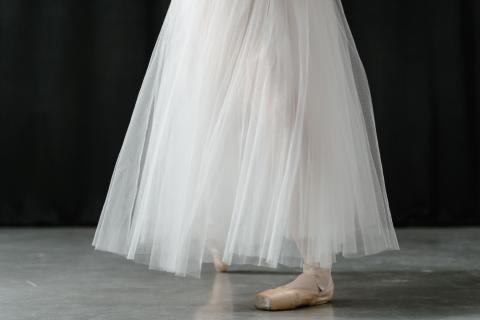
With a crack of my neck and a quick prayer, I step to the middle of the stage and turn to my audience, standing in stillness.
Instead of fast and technical, this dance is choreographed to focus on gestures and stillness, capturing the story of the music, a song about numbness and wishing to feel something again.
When will I feel again? When will I end this feeling of pain and numbness?
Rather than merely positioning my limbs, I channel my emotions into my body; it is my vehicle to make my audience feel how I feel, capturing this story.
The singer bellows, “These moving parts inside of me, they’ve been shutting down for quite some time, leaving only rust behind.” Leaping across the stage, I’m finally breaking free after so long, rediscovering sensation and genuine human connection. As the music slows, I return to my initial pose, but somehow I, and the audience, have changed.
As fervent as my love was for dancing as a child, I had to overcome an equally strong resistance to attend ballet class each day; eczema, having ravaged my skin for as long as I could remember, left my feet covered in open wounds and peeling skin. With blood seeping from my knees, hands, feet, and elbows staining my pink tights red, I struggled to put myself on stage. I thought people would focus only on what I saw—the bloody abraded skin I was trying desperately to hide—instead of what my dance could convey to the audience.
While eating disorders and Dance Moms don’t exactly portray competitive dance in a positive light, it was only when my dance career led me to the Evjen Elite Dance Company that I perceived my eczema differently. Having never danced on a high-level competitive team full of seniors, “unsure” would be an understatement for how I felt walking into the studio. Immediately, I perceived that the dancers pushed themselves to be the best they could be, and I was expected to do the same.
Rehearsals focused on getting back legs higher in jumps, turning out pirouettes, pushing shoulders down, and lengthening spines. Though this environment might have seemed like it could rip someone apart, in my case, it tore away at insecurities that bounded me. Focusing on working hard and improving confined me to one specific role—the one that mattered. The culture of caring about only one thing—perfection—convinced me my teammates were blind to the cuts on my skin, their eyes focused only on achieving the perfect crescent-shaped foot that all dancers dream of.
When my eczema became completely irrelevant, the stage became my second home, and I yearned to move under the spotlight. On stage, my voice consisted of how I moved, not what my skin looked like. My body was a vehicle to express something to the audience, and I was in full control of it.
Stepping on stage with eczema, there was no hiding it. I couldn’t reveal only partial pieces of myself. I had two choices: either step on stage and dance—showing my skin and facing the possibility of rejection—or hide in the wings. My audience was either going to judge me for my skin or surrender to my movement.
My eczema has all but subsided, but I would never erase the days of ripping off tights after ballet class; eczema gave me the all-or-nothing mentality that liberated my voice.
When I release media pieces online about Native American girls’ vulnerability to being lured into human trafficking traps, discussing how these cases are silenced compared to their white counterparts, I risk backlash and contention. But my eczema drilled into me the impulse to hold nothing back. When possessing a message that matters to me, I need my audience to hear it, and I know that if I am receiving rejection, it is only a sign that my unapologetic voice is doing its job.
Why this essay makes such an impact
She opens with a transportive experience. You feel like you’re on stage not even with her but as her. This isn’t the only way to start an essay, but it is tried and true. If any person makes their attempt at a transportive anecdote, they will immediately get something unique that puts their personal voice in motion. We can feel the intensity of her mind, her depth of emotion, and the incisiveness of her thinking. These are great traits already! That’s what an applicant needs to understand about the personal statement: establishing character traits is chief among their goals.
The student is vulnerable. Consider this sentence: “With blood seeping from my knees, hands, feet, and elbows staining my pink tights red, I struggled to put myself on stage.” The stakes are real. The biological details are gross. What does this mean? The student is brave. And she is confident, foreshadowing the theme of the essay. Speaking from a point of confidence now establishes further what the story will achieve. This is another way of articulating the importance of story, tone, and voice. The imperfection and discomfort of the experience makes the reflection more believable.
Where does the big claim come in? THE END. This is the most common mistake I see in students, even when they’ve chosen the right topic and even when they are good writers. They start with a “topic sentence” or “thesis” and attempt to prove it. This is backwards. Tell the story. If she deleted the ending, wouldn’t the reader be able to say, “Wow, she holds nothing back. She has an all-or-nothing, take-it-or-leave-it attitude! I love that.” If you identify claims in your own draft, ask yourself, “does the reader already infer this?” The claim should be a eureka moment for the reader where they say, “That’s exactly what I was thinking!!” You should be on the same page; the claim is simply an eloquent articulation of something that is already proven.
Focus on developing your story! Trust where the details will take you. In the case of this student, she had no idea that the essay would land where it did. As I pushed her to recount the details, the insights came to her. This process is not unique to this student—it is what happens every single time I work with a student. Embrace the humility of not knowing how your experiences have shaped you and you will end with a nuanced, powerful, supported theme instead of something generic, cliché, and unsupported


