

When I think about my childhood, I don't always remember the things most people do. I remember being sick, missing school, watching other kids experience things I desperately wanted to be part of, and wondering when life would finally feel normal. I remember feeling different, falling behind, and struggling with things that were completely outside of my control. I was diagnosed with Crohn's disease at a young age, and there was a point when I came dangerously close to losing my life. At an age when I should have been making memories and discovering who I was, I was learning how unpredictable life could be.
As I got older, the challenges didn't necessarily become easier; they just changed. I experienced grief, trauma, unhealthy relationships, and struggles with my own mental health. There were times when I felt like I had spent so much of my life surviving that I never really had the opportunity to figure out who I wanted to become. I watched other people move forward while I constantly felt like I was trying to catch up.
I wish I could say that everything I've experienced made me stronger, but I don't think that's entirely true. Some of it hurt me in ways I'm still working through. Some of it took years of my life that I'll never get back. And some of it changed parts of me that I'm still trying to understand. But somewhere along the way, I realized that while I couldn't change what happened to me, I could decide what I wanted to do with everything I had learned from it. I never imagined that the experiences that once made me feel so powerless would eventually become the reason I wanted to spend my life advocating for others.
This is not a story about overcoming everything. It's about everything I've lived through, everything I'm still learning to navigate, and how I found purpose in a life that hasn't always been kind to me.
Growing Up Before I Was Ready
I was diagnosed with Crohn's disease at a young age, and it completely changed what my childhood looked like. While other children were worrying about school, friendships, sports, and the usual experiences that come with growing up, I was dealing with a chronic illness that I could barely understand myself.
My health became something that controlled nearly every aspect of my life. There were appointments, treatments, painful symptoms, and periods when simply feeling well enough to participate in everyday activities was a challenge. My illness became so severe that I nearly lost my life.
There is something incredibly difficult about being a child and having to understand the possibility of dying before you have really had the opportunity to live. I missed out on so much during those years. School experiences, friendships, opportunities, and memories that other people often take for granted were things I couldn't always participate in. I watched life happen around me while I struggled to get healthy enough to be part of it.
Even after my health improved, I couldn't simply pick up where I had left off. I had missed important experiences, both academically and socially, and I was trying to find my place again while carrying the emotional impact of everything I had been through. Being sick for so long also changed how I viewed myself. I often felt different from my peers, and there were times when I struggled with the feeling that I was falling behind through no choice of my own.
What many people don't realize is that chronic illness doesn't only affect your physical health. It can influence your confidence, your relationships, your education, and the way you see your future. Even when your body begins to recover, the emotional impact can remain. I was fortunate to eventually reach a point where my health improved, but I could never get those years back. And that was only one part of the challenges I faced growing up.
When Circumstances Affect Your Opportunities
My father was an addict in recovery, which was another part of my childhood that influenced my experiences and opportunities.
Addiction is complicated, and growing up with a parent who has experienced it can shape a family in ways that are not always visible to outsiders. I loved my father deeply, and his history with addiction was only one part of who he was. However, that history also had consequences that affected me. Because of concerns surrounding my father's addiction and recovery, I was unable to be prescribed medication that could have helped me succeed academically. At a time when I was already struggling to keep up because of my health, I was also navigating educational challenges without access to the treatment I needed.
It was frustrating to know that I was capable of more but not having the resources or support necessary to reach my potential. I struggled in school, and over time, those struggles affected my confidence. When you repeatedly fall behind, it becomes easy to believe that maybe you simply aren't as capable as everyone else. It took me years to understand that struggling academically did not mean I lacked intelligence, motivation, or potential. I was a child dealing with circumstances that were largely outside of my control.
Looking back, I can recognize how much those experiences influenced my relationship with education. I didn't always believe college was something I could accomplish, and for a long time, I carried the belief that I was somehow behind everyone else.
Today, I see things differently. I believe children deserve access to appropriate care, educational support, and opportunities based on their individual needs rather than assumptions made about their family circumstances. I also believe that when a child is struggling, we need to look beyond their grades or behavior and consider what they may be experiencing outside the classroom.
Those beliefs have become an important part of the advocate I am today.
The Parts of Trauma That Follow You
As I got older, life continued to present challenges that I wasn't always prepared to navigate. I experienced unhealthy relationships, emotional trauma, and situations that left me questioning my worth. I also experienced significant losses, including the deaths of close friends and my father.
Losing my father in 2024 was especially difficult. Our relationship, like many relationships, had its complexities, but he was still my dad. His death brought a kind of grief that I don't think can ever be fully explained to someone who hasn't experienced it.
Grief has a way of changing how you experience the world. There are moments when life feels completely normal, followed by moments when the reality of someone's absence becomes overwhelming all over again.
Alongside those losses, I have also had to navigate my own mental health challenges.
For a long time, I didn't fully recognize how much of my behavior, emotions, and relationships were influenced by experiences I had never really processed. Trauma doesn't always look the way people expect it to. Sometimes it looks like anxiety, irritability, difficulty trusting people, or constantly feeling like something bad is going to happen.
Sometimes it looks like being the person who takes care of everyone else because you don't know how to ask someone to take care of you. And sometimes it looks like appearing completely functional on the outside while struggling internally. I have learned that healing isn't linear. There are periods when I feel confident in how far I've come and others when I recognize that I still have a lot of work to do. Healing does not mean that the past stops hurting. Sometimes it means learning how to move forward without allowing that pain to control every part of your life.
Finding Purpose in the Experiences I Never Wanted
For years, I felt like I was falling behind. Between my health, my mental health, relationships, motherhood, and the responsibilities of everyday life, there were times when continuing my education felt impossible. I watched other people accomplish things that seemed so far out of reach for me. I questioned my abilities, my future, and whether I would ever be able to build the life I had imagined.
But eventually, something began to change. I realized that many of the experiences I had spent years trying to overcome had given me an understanding of people that I couldn't have learned from a textbook alone. I knew what it felt like to be the child who needed more support than they were receiving. I knew what it felt like to struggle with circumstances outside of my control. I understood the frustration of needing help and not always knowing how to access it.
Most importantly, I understood how much of a difference one compassionate, nonjudgmental person could make. I began to realize that I wanted to be that person for someone else.
Today, I am pursuing my bachelor's degree in psychology at Southern New Hampshire University, focusing my education on mental health services and trauma. I also work as an Assistant Residential Coordinator in a residential mental health program, where I support individuals working toward stability, independence, and personal growth.
My experiences have influenced the way I approach my work. I don't believe that people should be defined by their diagnoses, their addictions, their trauma, or the most difficult decisions they have made. I believe that everyone has a story, and that understanding someone's circumstances is an important part of helping them move forward.
When someone is struggling, I try to remember that there is often more happening beneath the surface than what we can see. When someone experiences a setback, I understand that progress doesn't happen on the same timeline for everyone. And when someone feels like they have failed, I want them to know that their circumstances do not determine their worth or their potential.
Becoming the Example I Want My Children to Have
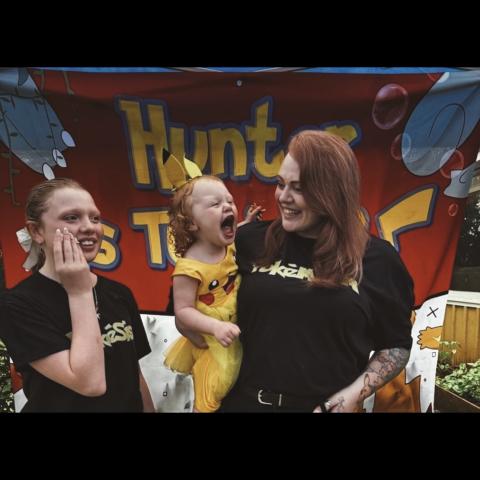
I am also a mother of two daughters, and motherhood has given my journey an entirely different meaning. I want my children to grow up knowing that their voices matter, their needs deserve to be taken seriously, and they never have to earn love or respect by how much they are willing to endure. I want them to have access to the opportunities, support, and encouragement that I didn't always have growing up. Most importantly, I want them to understand that their past does not have to determine their future.
Returning to college while raising two children, working full-time, managing a chronic illness, and navigating my own mental health has been challenging. There are long days, late nights, and moments when I feel like I am trying to balance more than one person reasonably should. But every completed course, every professional accomplishment, and every opportunity to grow reminds me that I am doing something my younger self once believed was impossible. I am creating a different future.
Not only for myself, but for my children.
Redefining What Leadership Means to Me
For a long time, I believed that being a leader meant having everything figured out. I thought leadership was something reserved for people who had followed a traditional path, made all the right decisions, and achieved success without so many setbacks. Now, I understand that leadership can look very different.
Sometimes leadership means speaking up for someone who doesn't feel comfortable advocating for themselves. Sometimes it means recognizing that someone needs support rather than judgment. Other times, it means acknowledging your own struggles while continuing to show up and do the best you can.
Through my education, professional experiences, and involvement in leadership development, I have learned that leadership is not about perfection. Leadership is about accountability, compassion, and using your experiences and knowledge to create opportunities for others.
I don't believe that experiencing trauma automatically makes someone stronger. Sometimes trauma leaves people exhausted, disconnected, and struggling to recognize themselves. I also don't believe anyone should have to experience suffering to discover their purpose.
What I do believe is that people deserve the opportunity to decide what happens next. My long-term goal is to continue my education at the graduate level and build a career centered on mental health advocacy, trauma-informed services, and supporting vulnerable individuals and families.
I want to advocate for children who are struggling in environments that don't fully understand their needs. I want to support people living with mental illness who feel overlooked or judged. I want to challenge the stigma surrounding addiction and help others recognize that recovery, growth, and change are possible. I want to be part of creating systems where people are treated as individuals rather than labels.
And in many ways, I want to become the kind of person I needed when I was younger.
My Story Is Still Being Written
When I look back at my childhood, I think about the little girl who spent so much time being sick that she missed out on simply being a kid. I think about the student who struggled to keep up and eventually began questioning her own intelligence. I think about the young woman who experienced loss, unhealthy relationships, and mental health challenges while trying to figure out where she belonged.
And then I look at where I am today.
I am a mother, a college student, a mental health professional, an advocate, and someone who has worked incredibly hard to create a future that once felt out of reach. I am proud of those accomplishments, but I also recognize that my journey is far from over. I still live with a chronic illness. I still experience grief. I still have difficult days with my mental health, and there are still parts of my past that I am learning to work through. But I no longer believe those things make me incapable of achieving something meaningful.
If there is one thing I hope others take away from my story, it is that you do not have to be completely healed to begin building a life you are proud of. You can struggle and still succeed. You can grieve and still experience happiness. You can have a complicated past and still create a meaningful future. For a long time, I measured my life by everything I had missed, everything I had lost, and how far behind I believed I was.
Today, I am learning to measure it by how far I have come. My trauma, my illness, and my losses will always be part of my story, but they are not the entirety of who I am. I cannot give my younger self the childhood experiences she missed, the medical support she needed, or the years she spent trying to catch up. But I can honor her by continuing to build a life that reflects everything she deserved.
I spent so much of my life fighting for the chance to live. Now, I am building a life with purpose and working toward a future where I can help others do the same.


